Marine Sanitation Device
TheTankMSD--Type ll USCG Approved
|
|
TheTankMSD Economy Type II Marine Sanitation Device is a biological aerobic (bacteria and air) marine sewage treatment system. Liquid and solid wastes are removed from the water by bacteria naturally contained in sewage.
Low profile, compact design, EZ retrofit! Easy installation-Solid simple system, quality components Virtually indestructible/will NEVER corrode! In stock — available now! Sizes for 4/12/16/32 persons The poop plant — the real deal! No frills — no BS! |
Treatment Principle
TheTankMSD Economy Type II Marine Sanitation Device is a biological aerobic (bacteria and air) marine sewage treatment system. Liquid and solid wastes are removed from the water by bacteria naturally contained in sewage.
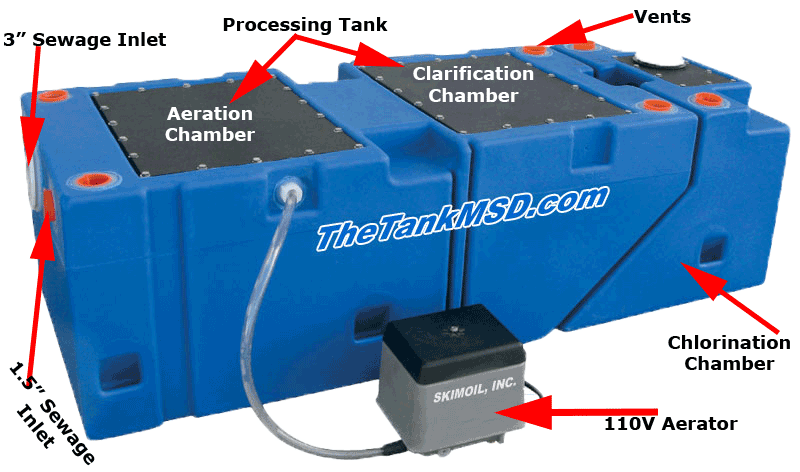
TheTankMSD consists of three treatment stages; aeration, clarification, and disinfection. In the aeration chamber (stage 1), the bacteria grow and multiply using the sewage as their food supply. This action reduces the quantity and size of the solid matter. In the clarification chamber (stage 2), the bacterial floc is separated from the treated solid matter. The treated water is clear and free from solids, however, the liquid must be disinfected prior to discharge overboard to kill any disease-causing bacteria. Disinfection is accomplished in the clarification chamber (stage 3). Flow through these three stages is caused by direct displacement. When new sewage flows into the aeration chamber, an equal volume flows through the clarification chamber. This volume, in turn, displaces an equal volume from the clarification chamber into the disinfection chamber, and overboard. No internal sewage pumps are necessary.
See EatsCRAP Bio Supercharger for all Type II MSD's
EatsCRAP reduces odors and keeps you out of the crapper.
NOTE: Running your gray water through an existing MSD will most likely hugely overload the MSD hydraulically since it was not originally sized for the large volumes of gray water — relative to the black water/sewage loading it was designed for. An overloaded MSD will not adequately treat the sanitary waste — taking you out of compliance on the MSD which is USCG approved for a much smaller hydraulic loading.
TheTankMSD Economy Type II Marine Sanitation Device is a biological aerobic (bacteria and air) marine sewage treatment system. Liquid and solid wastes are removed from the water by bacteria naturally contained in sewage.
TheTankMSD consists of three treatment stages; aeration, clarification, and disinfection. In the aeration chamber (stage 1), the bacteria grow and multiply using the sewage as their food supply. This action reduces the quantity and size of the solid matter. In the clarification chamber (stage 2), the bacterial floc is separated from the treated solid matter. The treated water is clear and free from solids, however, the liquid must be disinfected prior to discharge overboard to kill any disease-causing bacteria. Disinfection is accomplished in the clarification chamber (stage 3). Flow through these three stages is caused by direct displacement. When new sewage flows into the aeration chamber, an equal volume flows through the clarification chamber. This volume, in turn, displaces an equal volume from the clarification chamber into the disinfection chamber, and overboard. No internal sewage pumps are necessary.
See EatsCRAP Bio Supercharger for all Type II MSD's
EatsCRAP reduces odors and keeps you out of the crapper.
NOTE: Running your gray water through an existing MSD will most likely hugely overload the MSD hydraulically since it was not originally sized for the large volumes of gray water — relative to the black water/sewage loading it was designed for. An overloaded MSD will not adequately treat the sanitary waste — taking you out of compliance on the MSD which is USCG approved for a much smaller hydraulic loading.
| TheTankMSD | TTM #400 | TTM #1200 | TTM #1600 |
| Persons | 4 | 12 | 16 |
| Length | 41" | 56" | 76" |
| Width | 15" | 22" | 22" |
| Height | 17" | 17" | 17" |
| Dry Weight | 42 lbs | 76 lbs | 90 lbs |
| Wet Weight | 295 lbs | 575 lbs | 850 lbs |
| USCG Approval Nos. | 159.015/0700/0 | 159.015/0702/0 | 159.015/0703/0 |
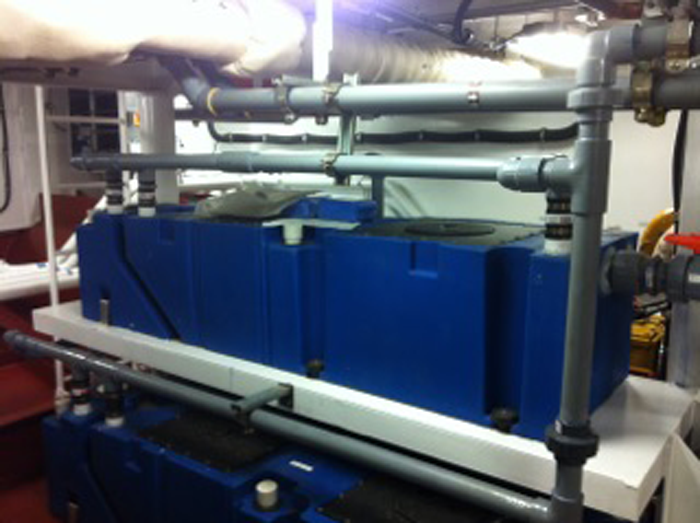
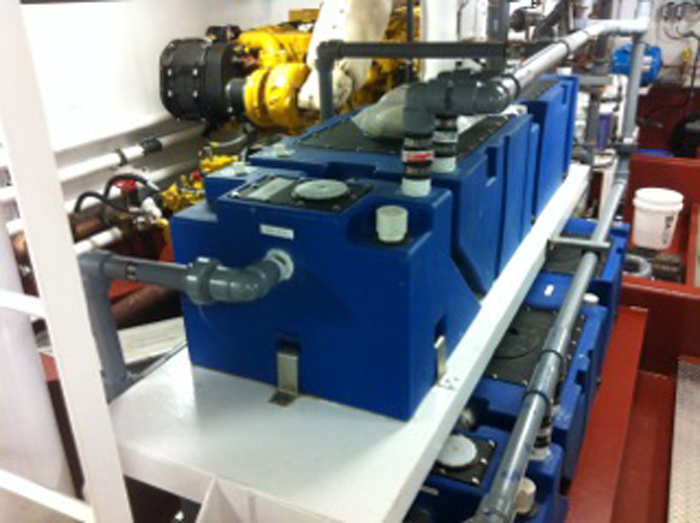
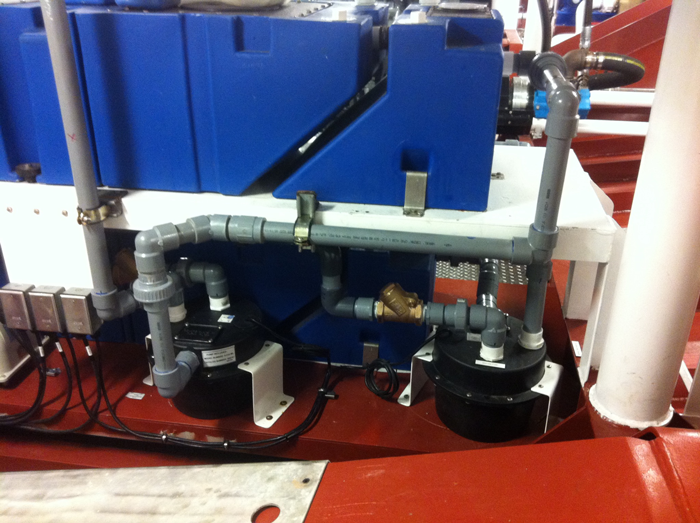
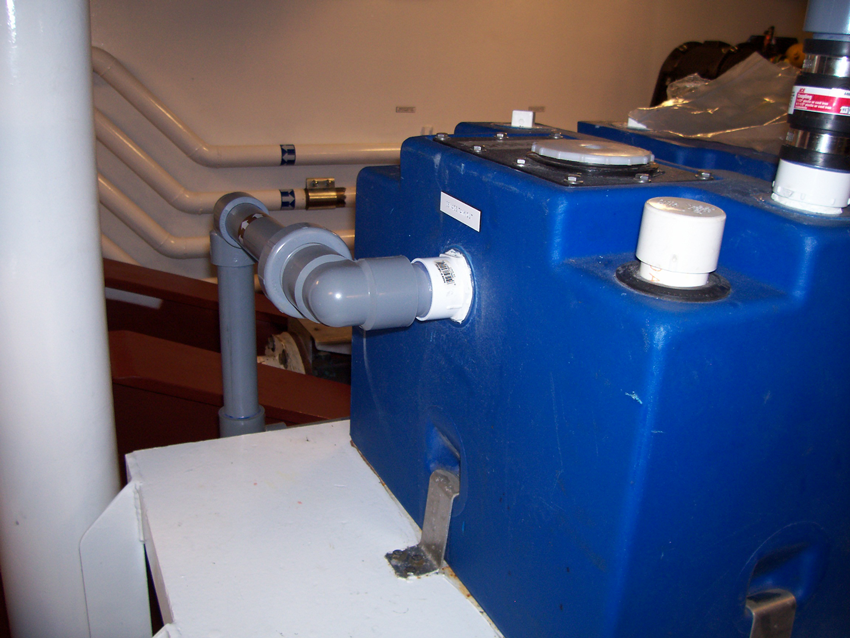
New TTM3200 approved for up to 32 persons / MSD Pump-Out System / Marine Throne Macerator Toilet / How TheTankMSD Works
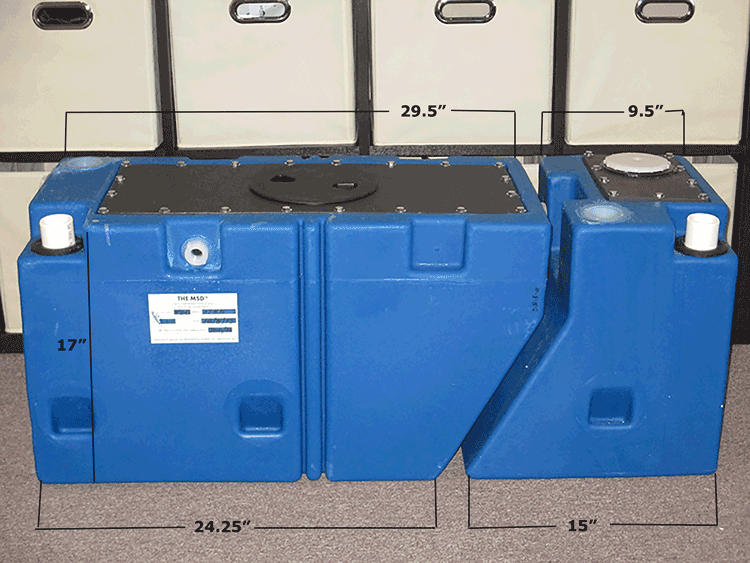
Click photo for dimmensions
|
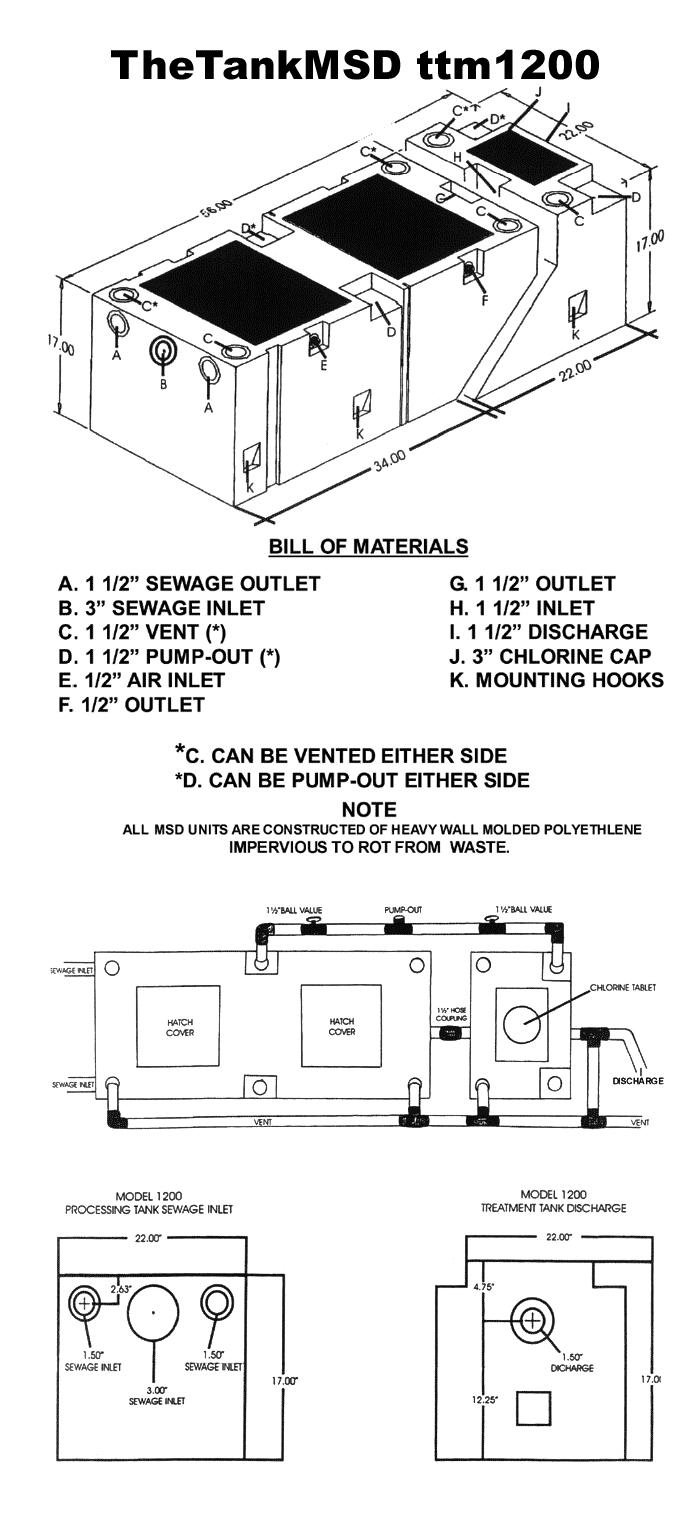
Click photo for dimmensions
|
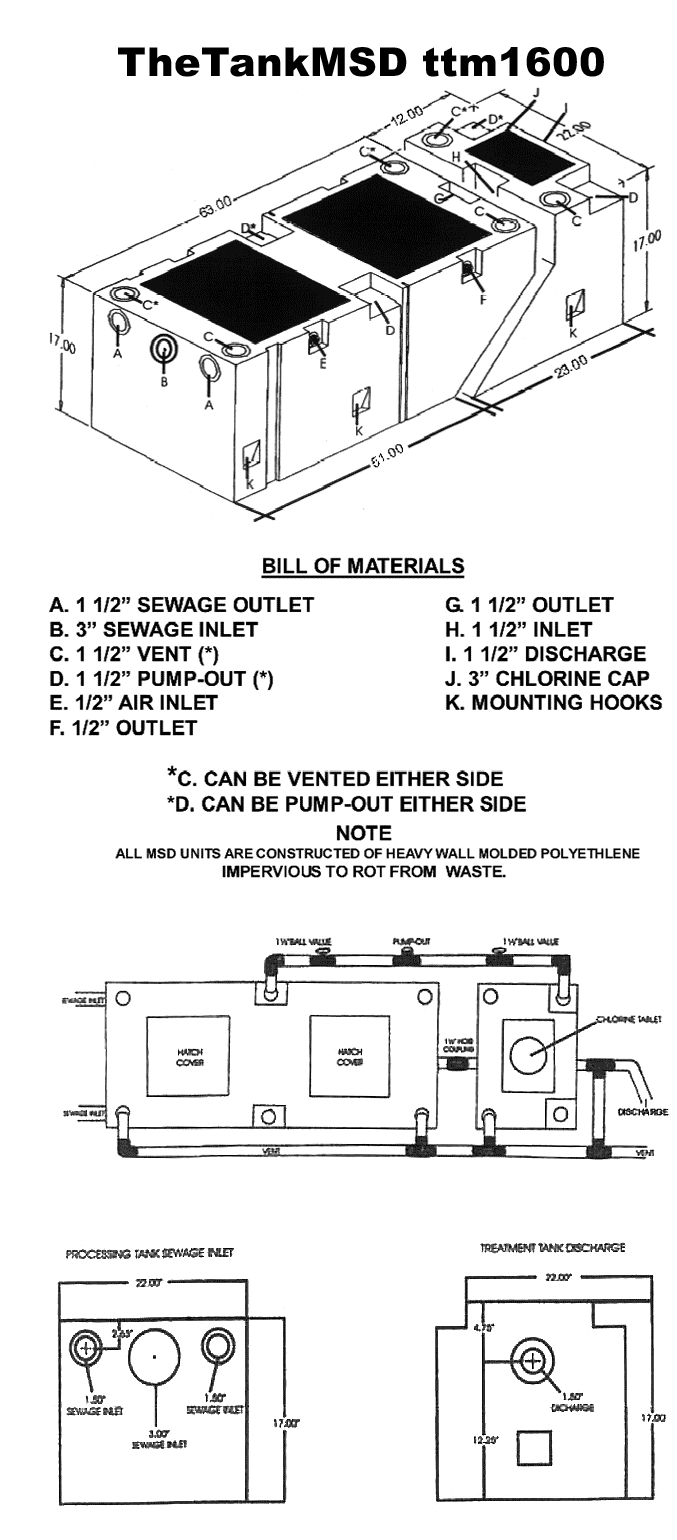
Click photo for dimmensions
|

AERATION
Sewage is aerated as soon as it enters the treatment system, and mixes with the aeration liquid already in the aeration chamber. Plastic non-clog diffusers inject air near the bottom of the aeration chamber so that the sewage remains in a state of aerobic decomposition. This aerated liquid contains the bacterial sludge that reacts with the sewage to start the reduction process. The movement created by the injected air helps mix the sewage with the bacterial sludge and prevents sludge and sewage solids from settling to the bottom. The air discharged from the surface of the liquid in the aeration chamber is vented to the atmosphere through a vent line connection.
CLARIFICATION
The liquid displaced from the aeration chamber flows into the clarification chamber for further treatment. Some of the suspended material will settle out into the chamber below, where it will be returned to the aeration chamber. The remaining sludge and waste material is removed as the liquid flows upwards through the biological filter media. Bacteria grow on the surface of the media and produce a sticky, slimy film that traps small particles of waste. The trapped waste is then consumed by the bacteria on the surface of the filter media. By the time the liquid reaches the top of the biological filter, it has passed by several layers of bacteria, ensuring that the sludge and waste removal process is completed. Clear water accumulates here until it is displaced into the discharge line, and the disinfection chamber.
DISINFECTION
The water flowing out the discharge line of the clarification chamber is collected in the disinfection chamber (chlorine contact chamber), where disinfecting chlorine tablets are located. In this chamber, the water mixes with the disinfectant for a residence time sufficient to complete the disinfection stage of the treatment process.
DISCHARGE
The clear disinfected waste water is then discharged overboard, or sent to a holding tank (for use in No Discharge Zones) for later discharge. When directly discharged overboard, the disinfected waste water flows from the disinfection chamber through a gravity discharge connection to overboard. If desired, the treated liquid can be retained in a holding tank, for later discharge, when the system is used as a Type III unit.
Sewage is aerated as soon as it enters the treatment system, and mixes with the aeration liquid already in the aeration chamber. Plastic non-clog diffusers inject air near the bottom of the aeration chamber so that the sewage remains in a state of aerobic decomposition. This aerated liquid contains the bacterial sludge that reacts with the sewage to start the reduction process. The movement created by the injected air helps mix the sewage with the bacterial sludge and prevents sludge and sewage solids from settling to the bottom. The air discharged from the surface of the liquid in the aeration chamber is vented to the atmosphere through a vent line connection.
CLARIFICATION
The liquid displaced from the aeration chamber flows into the clarification chamber for further treatment. Some of the suspended material will settle out into the chamber below, where it will be returned to the aeration chamber. The remaining sludge and waste material is removed as the liquid flows upwards through the biological filter media. Bacteria grow on the surface of the media and produce a sticky, slimy film that traps small particles of waste. The trapped waste is then consumed by the bacteria on the surface of the filter media. By the time the liquid reaches the top of the biological filter, it has passed by several layers of bacteria, ensuring that the sludge and waste removal process is completed. Clear water accumulates here until it is displaced into the discharge line, and the disinfection chamber.
DISINFECTION
The water flowing out the discharge line of the clarification chamber is collected in the disinfection chamber (chlorine contact chamber), where disinfecting chlorine tablets are located. In this chamber, the water mixes with the disinfectant for a residence time sufficient to complete the disinfection stage of the treatment process.
DISCHARGE
The clear disinfected waste water is then discharged overboard, or sent to a holding tank (for use in No Discharge Zones) for later discharge. When directly discharged overboard, the disinfected waste water flows from the disinfection chamber through a gravity discharge connection to overboard. If desired, the treated liquid can be retained in a holding tank, for later discharge, when the system is used as a Type III unit.
Standard Marine Sanitation Device offers these benefits:
- Applicable for processing 56-110 gal/day or crew sizes 2+
- USCG/IMO certified Type II MSD and also meets EPA regulations.
- Offered in our standard configurations or (optional) can be special configuration to meet the customer’s specifications & space limitations.
- Low maintenance — No moving parts and few requirements for maintenance.
- Low power/utility consumption. 110V
- No odor.
- Option of tablet or drip chlorinator
- Reasonably priced.
- Operates with fresh or saltwater.
- No sludge is developed.
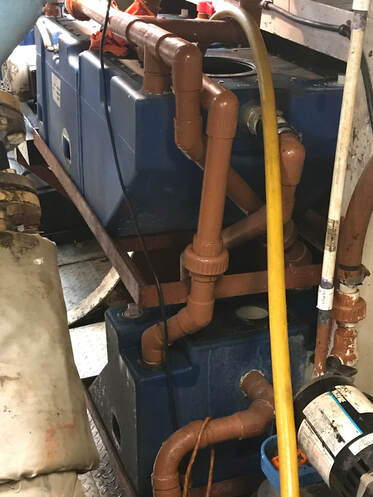
THIS IS WHAT NOT TO DO!